

Customer Onboarding Framework: Stages, Owners and Criteria
A customer onboarding framework defines the stages, owners and evidence that move an account from an agreed purchase to useful, repeatable product use. It helps a team answer three questions: where is this account, what must happen next, and who is responsible?
Corso uses Signed, Activated and Adopted for the onboarding path, with Advocate as an optional stage afterward. It is a working model to adapt, not an industry standard. A customer does not need to provide a testimonial, buy more seats or make a referral to complete onboarding.
Framework, process and checklist
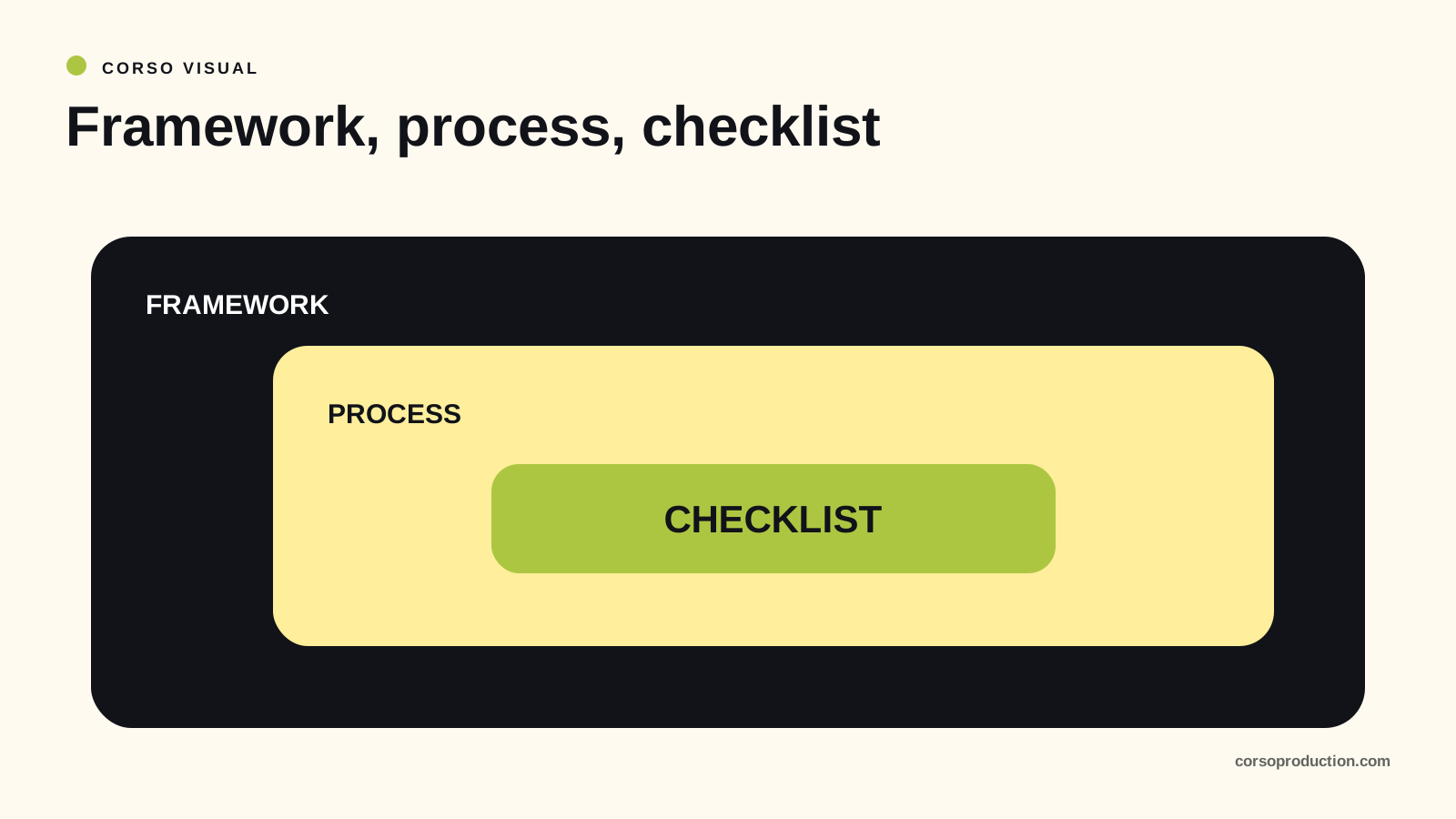
| Layer | What it defines | Example |
|---|---|---|
| Framework | Stages and criteria for progress | Activated means the customer has completed the agreed value workflow |
| Process | Sequence of work and decisions | Confirm prerequisites, train the admin, observe a successful run |
| Checklist | Specific tasks and completion conditions | Admin can assign the required permission and explain its effect |
The framework and checklist should reinforce each other. A checklist can include customer outcomes as well as internal activity. Use the 42-item customer onboarding checklist to turn stage criteria into assigned work.
The Signed, Activated, Adopted, Advocate loop
The loop extends beyond onboarding to show how a successful customer relationship can lead to feedback, references and referrals. Those activities require their own agreement and should not become prerequisites for customer access or support.
Advance an account when the agreed evidence is present. Dates still matter for planning and escalation, but an elapsed week is not evidence that a customer can use the product.

A framework table to adapt
The table uses a collaborative B2B SaaS product as its example. For a single-user or monthly workflow, replace the role coverage and frequency with the actual job.
| Stage | Entry | Evidence needed to advance | Accountable owner | Measure |
|---|---|---|---|---|
| Signed | Contract and sales context accepted | Customer agrees the outcome, first-value milestone, owners and prerequisites | Onboarding lead | Time to an agreed success plan |
| Activated | Required access and safe setup ready | Customer completes the agreed value workflow independently | Onboarding lead | First-value attainment within a fixed window, plus time to value |
| Adopted | First value demonstrated | Intended roles repeat the workflow at its natural frequency; support and handoff are agreed | CSM | Repeat use and required role coverage |
| Advocate, after onboarding | Documented customer outcome and willingness to participate | Customer approves a specific reference, story, review or referral | CSM, with marketing responsible for production | Consented advocacy participation; track renewal separately |
Copy the table and replace the criteria before changing the stage names. For each criterion, identify where the evidence lives: a customer confirmation, product event, task observation or signed handoff.
Stage 1: Signed
Start with the contract and a usable sales handoff. Summarize the customer’s goals and confirm whether they are still current. Record the sponsor, administrator, day-to-day users and any technical or purchasing owners.
Exit criterion: an agreed success plan states the first-value milestone, intended outcome, dependencies, dates and responsibilities on both sides. If the sponsor delegates approval, record who has that authority.
Owner: one named onboarding lead, who may also be the CSM in a small team. Assign ownership based on responsibility and capacity rather than a fixed account-count threshold.
Measure: days from signature to an agreed plan. Report the share still waiting and split by implementation complexity. A median drawn only from fast, successful accounts understates the delays you need to manage.
Useful assets: a kickoff agenda, success-plan template, welcome message and focused intake. The client onboarding questionnaire contains questions you can adapt to the decisions that remain unresolved.
Check before advancing: the buyer and the person who will use the product may be different people. Confirm that the necessary user roles are involved, not simply that a meeting took place.
Stage 2: Activated
Activation means the customer has demonstrated the first meaningful product outcome. Define it before choosing lessons or tours.
Exit criterion: the customer completes the agreed workflow independently and can recognize whether the result is correct. Distinguish a successful sandbox exercise from a production business outcome. For consequential actions, practice and required approvals may be necessary before a real run.
Owner: the onboarding lead, with product and implementation support for technical dependencies.
Measures: the share of eligible accounts reaching first value within a fixed window, and time to first value among those that reach it. Show unfinished accounts alongside the duration measure. Keep the starting event fixed; signature and first access answer different questions.
Useful assets: role-specific practice, a short workflow demonstration, captions and written reference steps. The onboarding video guide helps decide what benefits from a recording.
Check before advancing: a CSM demonstrating a workflow proves the demonstration worked. Observe the customer’s own attempt to establish whether they can repeat it.
Stage 3: Adopted
Adoption is repeatable use that fits the customer’s job. A monthly finance process does not need weekly activity; a single-user account does not need a second user. Define frequency and coverage around the intended use case.
Exit criterion: the required people can repeat the workflow, know how to resolve common problems and have an agreed support path. Add a second use case only if it belongs to the scope; unnecessary expansion can delay a useful handoff.
Owner: the CSM, accepting the account from the onboarding lead where those are separate roles.
Measures: repeat-use rate and coverage of the roles needed for the agreed outcome. Use the customer education KPI definitions to keep users, accounts and observation windows distinct.
Useful assets: reference material, a rollout note the champion can forward, and role-specific learning paths. Define their owner and update trigger in the customer training plan.
Check before advancing: if usage depends on one champion, establish whether that is expected or a continuity risk. A second trained administrator may help a team account; withdrawing support for a month is not a valid test of adoption.
Repeated explanations can help prioritize guidance. Value the work as staff capacity and estimate the share that reusable material could replace. The time spent today is not automatically the time a new asset will save.
Stage 4: Advocate, after onboarding
Advocacy is a voluntary opportunity after a customer has achieved a result. Some successful customers cannot provide public references because of company policy or confidentiality. Their onboarding and service should be complete regardless.
Entry: a documented outcome and customer interest in sharing it.
Exit criterion: the customer approves the specific use: a reference call, a case study, a review or a referral. Confirm the wording, attribution and scope of permission. Renewal and expansion are commercial outcomes to track separately.
Owner: the CSM is accountable for the relationship; marketing can own the production and approval process.
Measure: participation among eligible, invited customers, with the invitation period stated. A low rate may reflect customer restrictions, not poor product value.
Useful assets: a short interview guide, evidence supporting the outcome and an approval record. The Corso portfolio shows how production work can be presented; keep sample work clearly separate from measured client results.
Four recovery paths for stalled accounts
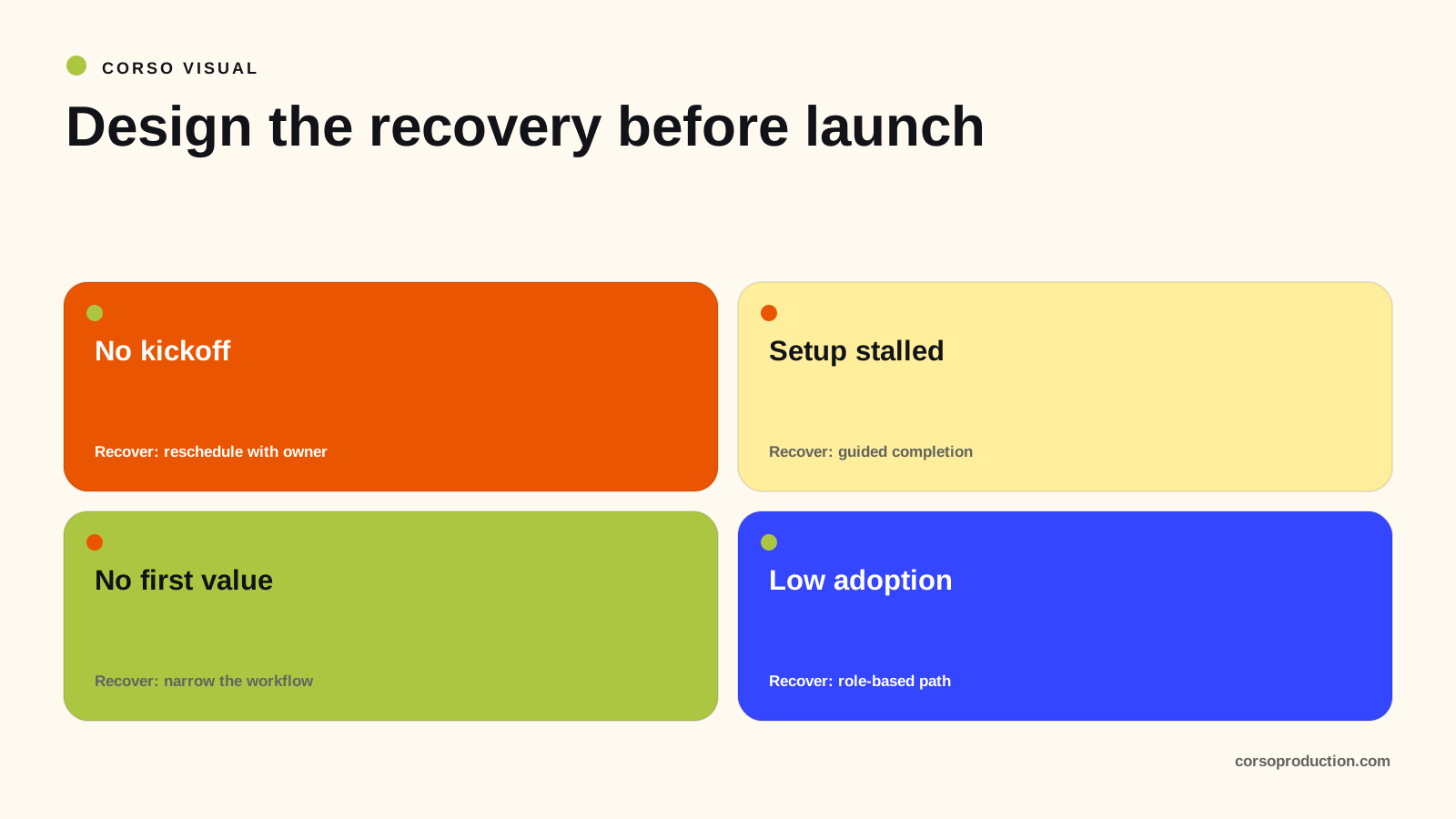
Use the branches as prompts to investigate. A missed reply is an observation, not evidence that a customer is embarrassed, disengaged or at fault.
The champion leaves
Check which other people still use the product and whether the success plan remains valid. Contact the agreed sponsor or successor, update responsibilities and train new role holders. Do not automatically move an entire adopted account back to the beginning because one person changed jobs.
The customer goes quiet during setup
Use the escalation interval agreed in the plan. State the blocked milestone, the input needed and the effect on dates. Ask whether the scope or priority has changed. The client onboarding email templates include language to adapt.
IT or security blocks an integration
Identify the outstanding control and its owner. Consider a smaller approved scope, synthetic data or an authorized sandbox while the review continues. A manual import must not bypass restrictions that apply to the same data or access. If there is no approved alternative, record the dependency and revise the milestone.
The dashboard says onboarded but usage is weak
Check the event definitions, expected workflow frequency and customer intent. Then inspect access, usability, training and business changes. Correct an inaccurate stage if needed, documenting the evidence. A quiet usage chart alone does not identify which intervention will help.
Draft the framework in a 90-minute workshop
Ninety minutes can produce a first draft. It does not include implementing events, changing systems or validating the model with customers.
- First 20 minutes: select recent accounts across successful and stalled implementations. Note their use cases and prerequisites.
- Next 25 minutes: place them against proposed criteria and record disagreements. Identify where evidence is missing.
- Next 25 minutes: agree one accountable owner per stage and an escalation route for unresolved dependencies.
- Final 20 minutes: choose one segment for a pilot, assign the missing instrumentation and set a review date.
Test the framework on representative accounts, including exceptions. Automate stable transitions only after checking their evidence and recovery paths. For the in-product portion, use the user onboarding checklist.
Questions about onboarding frameworks
Are these the standard four stages of customer onboarding?
No. They are Corso’s working lifecycle model. Onboarding runs through Signed, Activated and Adopted; Advocate describes an optional relationship afterward. Choose stage names and criteria that match your product and operating model.
How long should each stage take?
Set dates using comparable implementations, customer availability and known dependencies. Report delayed and unfinished accounts. A faster segment’s duration should not become a universal target for a complex rollout.
Who owns the framework, customer success or product?
Name an accountable lead for the overall customer outcome. Product owns product behavior and instrumentation; implementation handles technical setup; education owns learning materials; the customer owns its agreed dependencies. Record responsibility at both program and account level.
Does the framework replace an implementation plan?
No. Complex migration, integration and regulated account opening require their own plans and controls. This framework helps coordinate customer progress around that work; it does not replace legal, security or technical acceptance criteria.
Improve one well-defined problem
Use the framework to locate a problem, then establish its cause. When clearer instruction is the missing piece, Corso can build reusable material for one audience and workflow. Plan a customer adoption pilot with a defined outcome and measurement responsibilities.